


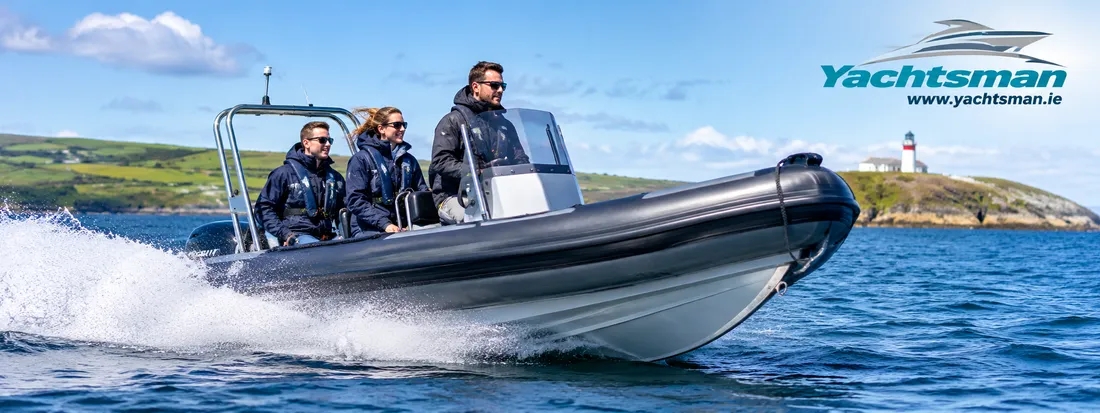
Rigid inflatable boats, or RIBs, combine a solid hull with buoyant inflatable tubes. This gives them a useful mix of stability, speed and manoeuvrability. A RIB boat Ireland owner can often trailer the craft, launch it from a slipway and use it for everything from a family outing to coastal support work.
RIBs suit harbours, lakes, sheltered bays and many coastal routes. They are responsive and versatile, but wind, swell, tides and cold water can change conditions quickly. Intended use should influence both safety arrangements and insurance.
These are among the most practical rigid inflatable boat uses because the inflatable collar provides buoyancy and the rigid hull supports efficient handling. A stable open deck suits passengers, tackle and specialist equipment, but limits still depend on the model, engine and loading.
The Irish Coast Guard recommends checking weather and tides, wearing a lifejacket, carrying a way to call for help and telling someone your plans.
A RIB is well suited to exploring Ireland’s coastline, nearby harbours, secluded beaches and wildlife. Its speed makes short journeys practical, while its manoeuvrability helps in confined waters. Plan around fuel range, passenger capacity and exposed sections of the route, and be willing to turn back.
RIB fishing in Ireland gives anglers access to inshore marks, reefs and estuaries. The open layout helps with rods and tackle, while a stable deck assists when landing fish. Secure hooks, lines, fuel and catch-handling equipment, and avoid sudden movement.
Explain fishing use when arranging insurance, as specialist equipment or offshore trips may not be treated as ordinary pleasure boating.
RIB diving support is another common use. A RIB can carry divers, cylinders and surface-marker equipment, then remain close to a dive site as a surface platform. Cylinders must be secured, divers need a safe way to reboard and the operator must understand the dive plan while maintaining a proper lookout.
Diving should be declared to the insurer. Ask about equipment, passenger liability, recovery activity and operating areas; standard recreational cover may not include every diving risk.
RIBs can support swimming, snorkelling, paddleboarding and supervised towing. Speed should match visibility, traffic, hazards and training. Anyone entering the water needs suitable buoyancy and thermal protection because Irish waters are cold year-round.
For families, a RIB offers an accessible way to enjoy local waterways and short coastal outings. Explain where lifejackets, first-aid supplies and communication equipment are kept. Children need close supervision while boarding, underway and near the water.
Stay within the manufacturer’s passenger and loading guidance; maximum capacity does not necessarily mean comfort on a long trip.
RIBs are useful for safety patrols, event support, search assistance and transport to hard-to-reach areas. These jobs may involve frequent use, additional crew, night operation or contact with other craft.
A boat used by a club, event organiser or support service may need organised or commercial cover rather than a private pleasure policy. Training, passenger numbers and the actual purpose of each trip should be disclosed.
RIBs also support marine surveys, environmental monitoring, photography and aquaculture work. Electronics and sampling gear can be expensive and vulnerable to water damage, so insurance should distinguish between the vessel, fitted equipment and removable professional equipment.
A RIB can face accidental damage, grounding, collision, theft, fire and weather-related loss. There may also be responsibility for injury or damage to another vessel or property. RIB insurance is not automatically compulsory for every private recreational craft, although a marina, lender, club or activity provider may require it. The policy must reflect the real use of the boat.
Important considerations include:
•Hull and equipment protection: Check whether the hull, tubes, engine, trailer and specified equipment are covered. Valuation, excesses, salvage and wear-and-tear conditions can affect a claim.
•Third-party liability: Check the limit for claims involving injury or damage to another person’s property. Passenger numbers and activities may affect the required level.
•Personal accident: Consider whether benefits apply to the owner, crew or passengers. This is different from liability cover and has its own conditions.
•Navigation limits: Confirm permitted waters, distance from shore, seasonal restrictions and whether lakes, harbours and offshore routes are included.
•Fishing and diving use: Disclose RIB fishing Ireland, RIB diving support, specialist equipment and recovery work before cover begins.
•Private versus commercial use: Carrying paying passengers, conducting surveys or supporting events can change the insurance requirements.
•Exclusions and conditions: Read requirements for security, mooring, winter storage, approved drivers, training and safety equipment.
Choose cover based on vessel type, activities and boating requirements, not simply price. If the boat, engine, berth, equipment or use changes, the policy should be reviewed.
Inspect the tubes, valves, hull, steering, engine, fuel system, batteries and trailer regularly. Before the first launch after winter storage, check the fire extinguisher, communications equipment and other safety gear.
Before each trip, check the forecast, sea or lake conditions and tides. Tell a responsible person where you are going and when you expect to return. Carry a properly fitted lifejacket for everyone, a reliable communication method, signalling equipment and a first-aid kit. Brief the crew on the emergency plan. In an emergency, dial 112 or 999 and ask for the Coast Guard.
A RIB boat Ireland owners use for fishing, diving, family trips or professional support can be exceptionally versatile. Its stability, speed and manoeuvrability suit many Irish boating environments, but those varied uses create varied risks. Good maintenance, sensible safety planning and accurate RIB insurance information should work together. Understanding the risks and checking the policy terms allows owners to enjoy their boat with greater confidence.
A RIB has a solid hull and inflatable side tubes. In Ireland it is commonly used for coastal exploration, fishing, diving support, family trips, watersports, rescue support and marine research. Its buoyancy, speed and manoeuvrability make it practical in sheltered waters and on suitable coastal routes.
Insurance is not automatically compulsory for every privately used recreational RIB, but a marina, lender, club or activity provider may require it. Owners should still consider accidental damage, theft and third-party liability. Always check the policy terms and disclose the boat’s intended activities and operating area.
It can be. Fishing and diving may involve extra equipment, offshore routes, recovery work or specialist risks that basic pleasure cover does not include. Tell the insurer what activities are planned, where they take place and whether anyone pays for the service. Cover depends on the policy wording.
Depending on the policy, cover may include accidental damage, theft, certain weather events, specified equipment and third-party liability. Some policies may offer personal accident benefits or recovery assistance. Exclusions, excesses, navigation limits, security requirements and maintenance conditions vary, so read the wording carefully.