
Insuring Search and Rescue Vessels in Ireland: A Special Category
What Is Search and Rescue Vessel Insurance in Ireland?
What Is Search and Rescue Vessel Insurance in Ireland?
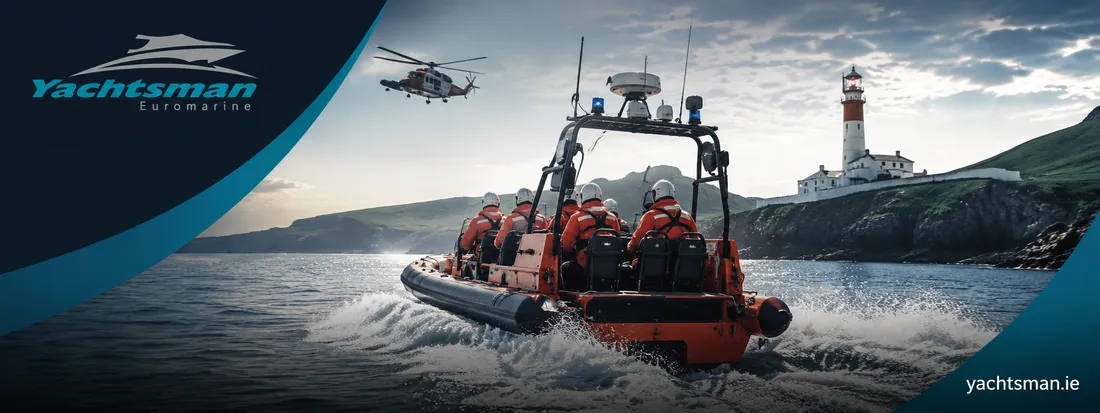
Search and rescue vessel insurance in Ireland is a highly specialised category of marine cover designed for vessels that operate in emergency response, lifesaving, and coastal patrol roles. Unlike commercial fishing boats or leisure craft, search and rescue vessels are routinely deployed in extreme weather, operate at high speed in difficult conditions, and carry crews who face elevated personal risk during every callout.
Organisations and operators running rescue boats, whether independent lifeboat stations, harbour authority patrol craft, or privately operated rescue support vessels, need search and rescue vessel insurance in Ireland that reflects the unique operational profile of this work, rather than relying on standard marine policies that aren't built for emergency response use.
Why SAR Boats Require a Distinct Insurance Approach
SAR boat insurance differs from conventional marine cover because the risk exposure is fundamentally different. Search and rescue vessels are launched in conditions that most other boats would avoid entirely, including storm-force winds, heavy swell, and reduced visibility, often at night. Crews are frequently required to approach casualties, other vessels, or people in the water, increasing the likelihood of collision, grounding, or crew injury during a single operation.
Because of this, SAR boat insurance typically requires insurers with specific experience underwriting emergency response vessels, since general marine underwriters may struggle to price risk accurately for a vessel that operates almost exclusively in conditions other boats are designed to avoid.
What Does RNLI Vessel Cover Typically Address?
RNLI vessel cover, and cover for similar lifeboat and rescue operations, generally needs to account for several specific exposures: hull and machinery damage sustained during high-speed operations or rough-weather launches, third-party liability arising from contact with other vessels or casualties during a rescue, personal accident and injury cover for volunteer or professional crew, equipment cover for specialist rescue gear such as towing equipment, stretchers, and communication systems, and cover for shore-based launching equipment including tractors, davits, and slipways.
Given that many rescue operations in Ireland are carried out by volunteer crews, personal accident provisions are often a central part of RNLI vessel cover, ensuring that those who respond to emergencies are properly protected if they are injured in the course of their duties.
Coast Guard Vessel Ireland Insurance Considerations
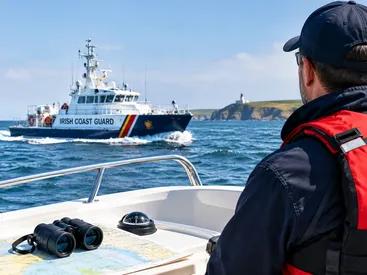
Coast guard vessel Ireland insurance carries its own set of considerations, particularly where vessels are used for both patrol and emergency response duties. These vessels often operate under contract or in coordination with state authorities, which can introduce additional liability and indemnity requirements not typically seen in private marine insurance.
Operators of coast guard vessel Ireland fleets need to consider cover for multi-agency operations, where a vessel may be working alongside other emergency services, as well as protection against claims arising from search operations that span both inshore and offshore areas. Given the broad operational remit of coast guard vessels, from pollution response to medical evacuations, insurance arrangements often need to be reviewed and updated more frequently than standard marine policies.
Key Risk Factors That Affect SAR Vessel Premiums
Several factors influence the cost and structure of search and rescue vessel insurance in Ireland. These include the vessel's speed and engine power, since faster rescue craft generally carry higher risk during operations, the frequency and nature of callouts, the experience level of crew members, and the geographic area of operation, particularly for vessels regularly working in exposed offshore waters.
Vessels with strong maintenance records, modern safety equipment, and crews who undergo regular training and assessment are generally viewed more favourably by insurers familiar with this category, since these factors directly reduce the likelihood of an incident during a high-risk callout.
How to Choose the Right Search and Rescue Vessel Insurance in Ireland
Selecting appropriate cover starts with finding an insurer who genuinely understands the operational reality of search and rescue work, rather than treating it as an extension of leisure or commercial marine insurance. Operators should look closely at how a policy handles claims arising mid-rescue, whether personal accident cover extends to volunteer crew, and how quickly a policy can respond following an incident, given the urgent nature of this work.
It's also worth confirming whether a policy accounts for mutual aid situations, where a vessel may be called to assist outside its usual operating area, since this is common practice among rescue organisations working along the Irish coastline.
FAQs:
Does search and rescue vessel insurance in Ireland cover volunteer crew?
Most policies in this category include personal accident cover for volunteer crew members, given how central volunteers are to many rescue operations.
Is SAR boat insurance more expensive than standard boat insurance?
Generally yes, since the operational risks involved in rescue work are significantly higher than leisure or even most commercial marine use.
Do coast guard vessel Ireland policies cover multi-agency operations?
Many policies in this category are structured to address liability arising from joint operations with other emergency services, though this should always be confirmed directly with the insurer.
You may also like to Read